By Simon Thornton
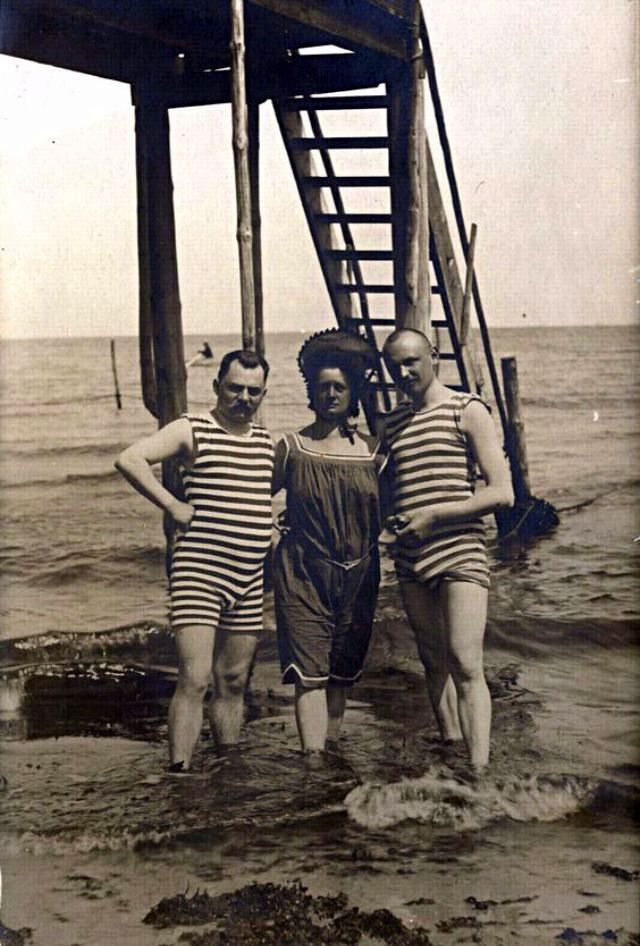
Decades, and in some ways, entire generations of people can be defined by the clothing that they wear, and few forms of clothing might reveal shifting cultural expectations as clearly as swimwear. Fashion is a reflection of cultural norms and values, and the choice to conform, or to diverge, from those cultural expectations has long been a primary form of expression for both groups and individuals – sometimes going so far as to risk personal harm simply to live in a way that feels authentic. Although we may not think much about what we choose to wear to the beach today, every generation has had its own idea of what is acceptable, until fashion, culture, and laws changed, and yesterday’s controversy eventually became today’s normal.
Denny Blaine Park is a living testimony to this history. For over 100 years, the beach has challenged the rules and cultural expectations surrounding bodily expression, helping to redefine how Seattle thinks about public space, swimming, modesty, gender, and belonging. To properly trace this history, we must start over a century ago:
The Full-Coverage Era
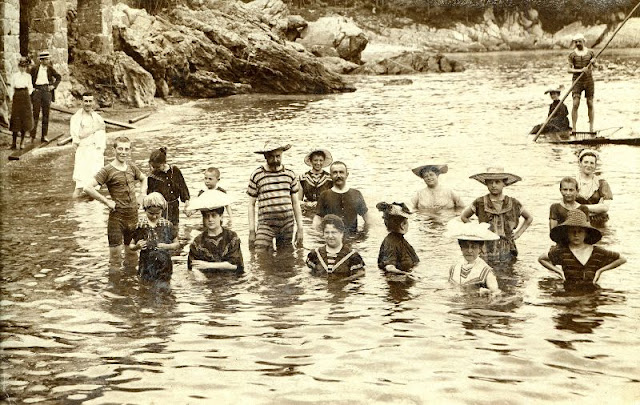
In 1917, when the Lake Washington Ship Canal project lowered Lake Washington by 9 feet, creating the beach we know and love today, swimwear was expected to cover far more of the body than most modern clothes do today. Women didn’t wear swimsuits – they wore “bathing and swimming costumes”, often including skirts, stockings, caps, and other full-coverage items, primarily made of wool, which was heavy and bulky. While men were expected to wear fewer pieces, typically either a one-piece or two-piece, they were still expected to cover their entire chest, a reflection of a culture that valued respectability, strict gender roles, and placed an emphasis on conformity to cultural norms enforced by the threat of legal repercussions. At this time in Seattle, Parks Board policy prohibited men from wearing only swim trunks, prompting many to “avoid the beaches and risk their lives swimming in places that are dangerous.” One such place where men sought out this freedom against the laws and customs of the time was Denny Blaine Park.
During this period, the historical record shows that Denny Blaine Park, as a secluded park without infrastructure such as a lifeguard or bathrooms, was a popular place for swimming where boys would change openly. This was much to the annoyance of the nearby neighbors, who took extreme measures such as commissioning their own gardener as a police officer to run off the beachgoers who offended their modest sensibilities.
The Athletic Era
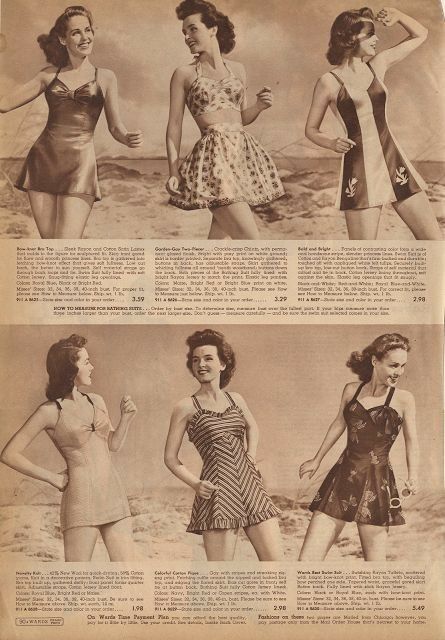
By the 1930s, swimwear had begun to become more athletic and less burdensome. For women, this meant a transition from heavy wool suits to lighter-weight one or two-piece suits thanks to the invention of new materials such as “Lastex”, a coated fabric that used natural rubber to produce a more comfortable fabric that looked better when wet, and the realities of wartime rationing restrictions on textile products. By this time, a focus had been put on the ideal of an athletic, fit, and healthy female image, so women were encouraged to participate in athletic activities like swimming, and partake in suntanning – a newly popularized health trend – which encouraged designers to create smaller-profile bathing suits with shorter legs, wider arm openings, and minimizing shoulder straps that could cause unsightly tanlines.
Men, however, at this time got their big break in public swimwear – a letter to the Seattle Park Board in 1934 captures it well, wherein the Sporting Goods Manager of University Book Store, O.H. Lindstedt lamented: “I am writing you in reference to the obsolete laws in this city regarding bathing suits,” arguing that “every customer for a man’s bathing suit who enters our store bemoans the fact that our public beaches will not permit the use of trunks.” He further stated that “false modesty” was hardly an excuse for continuing to require an “inadequate and irksome jersey top” at a time when public standards around clothing were already changing. Mr. Lindstedt’s letter was presumably effective, as in 1934 the Parks Board changed the rules to allow men to swim topless, making trunks the predominant swimwear style, and allowing men to partake fully in athletic and suntanning activities.
In today’s modern age – any debate over the ability for a man to be topless would seem ludicrous, but this is simply an example of how significantly cultural expectations concerning fashion can change over time. A shirtless man could be found anywhere at any time in Seattle now, but prior to 1934, for a man to swim or sunbathe shirtless at Denny Blaine Park was an illegal act that caused moral panic.
The Fashion Era
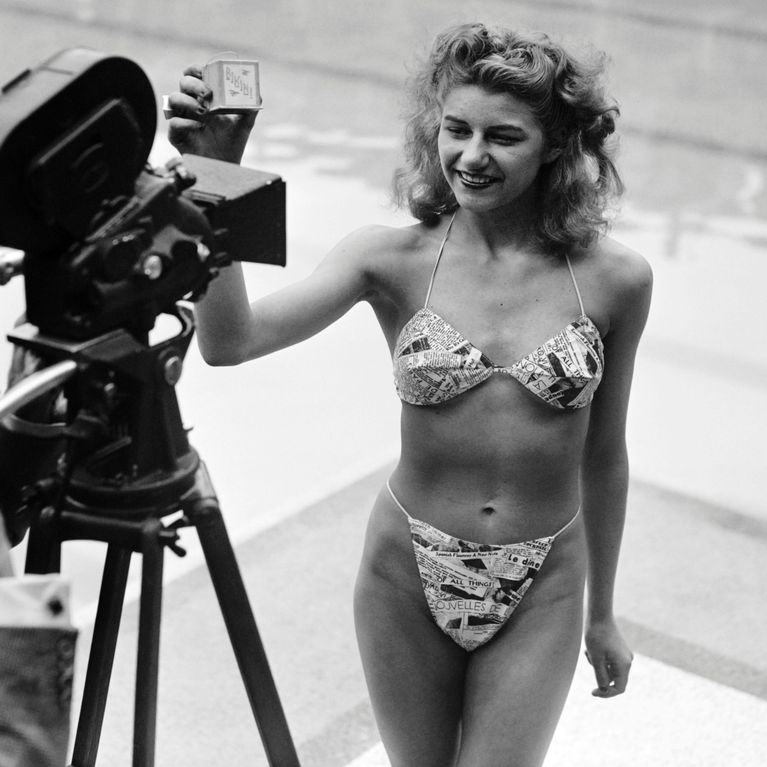
By the mid-20th century, fashion had changed drastically, and swimwear was no exception. Thanks to the radical new advancements in synthetic textiles and mass manufacturing techniques and capacity after World War II, designers had more choices than ever to choose from when constructing garments. In 1946, Louis Réard shocked the world by introducing something never seen before: The Bikini.
The Bikini, named after Bikini Atoll, was treated as extremely salacious, so much so that Réard struggled to find a model to debut it, eventually turning to Micheline Bernardini, an exotic casino dancer who had no qualms about being seen nearly nude in public. The first bikini was printed with newspaper print in a nod to how certain Réard was that it would generate global headlines. However, in America – it wasn’t until the 1960s that the bikini was fully embraced due to pressure from youth groups focused on body freedom and liberation. While American swimmers were slow to adopt the bikini style, women’s swimsuits continued to become shorter, slimmer, and more form-fitting – many incorporating breast-enhancing and shapewear elements to promote an ideal image.
During this period, men’s swimsuits stayed largely the same – changing materials, such as the introduction of nylon into swimwear by Speedo in 1956, but maintaining the same basic short- to mid-length trunk format, often coupled with a matching open shirt removed when entering the water. For men, less fabric had become ordinary. For women, less fabric remained controversial.
By this point, the male chest had become normal at the beach and in daily life, while the female breast remained treated as inherently provocative and sexualized. Women were not simply being told what to wear – they were told which parts of their bodies belonged to them, and which parts society claimed the right to control, and to demand be covered.
The Feminist Era
By the 1970s, the cultural conversations around swimwear had moved beyond mere fashion and became increasingly focused on topics of feminism, bodily autonomy, politics, and the male gaze. While the bikini had gained acceptance in American beach culture in the 1960s, women’s toplessness remained widely treated as an act of indecency, even in situations such as breastfeeding in public. While men had earned the right to bodily expression decades earlier, women’s bodies continued to be sexualized and regulated. For those who participated in the mainstream culture, that often meant swimsuits that were heavily stylized with extreme body-morphing cuts and exotic patterns.
However, the rising feminist movement pushed against this trend of swimwear that increasingly focused on hypersexualization and objectification of women. At Denny Blaine Park, women, many of whom identified as lesbians, began sunbathing topless at the beach during this period as an act of defiance to cultural norms and as a radical act of self-expression. It was during this time that the beach earned its name “Dykekiki Beach” – a combination of the terms “dyke” and “Waikiki”, a simple moniker that reveals the important cultural incubator that Denny Blaine Park was during these years, serving not only as a space where people could remove clothing, but one where deep social connections were formed, making space for women, lesbians, and others whose bodies and identities were excluded from mainstream life.
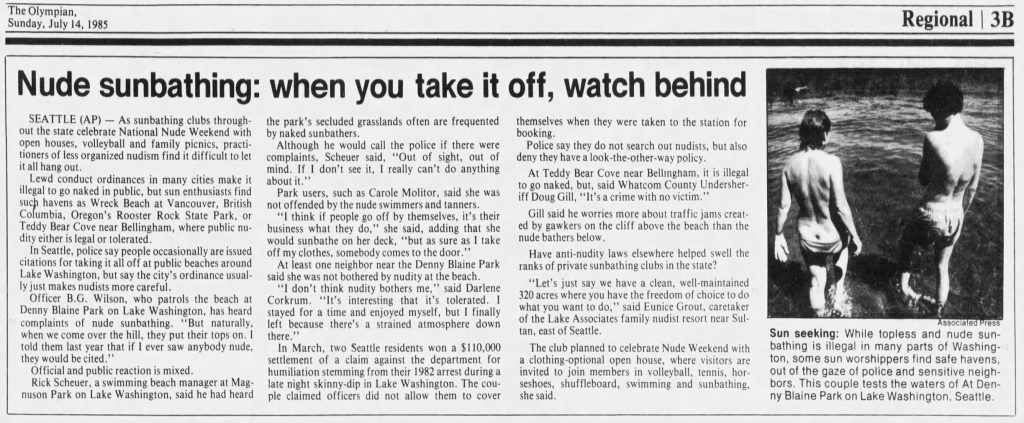
However, those who enforced the cultural norms of mainstream life were not entirely absent from Dykekiki’s shores. In the 1980s, concerns were raised by locals over the activities that happened at the beach, and police were sent to enforce indecency laws against topless women. The earliest verified arrest may be that of Cappy Kitz, who was cited in 1982 for being topless while sunbathing. Later, in 1988, Seattle police cited 17 women for lewd conduct over the span of six weeks, in a crackdown targeted at suppressing queer women’s use of the space. Despite this, many continued to use the beach topless or nude as a form of self-expression and protest.
The “Choice” Era
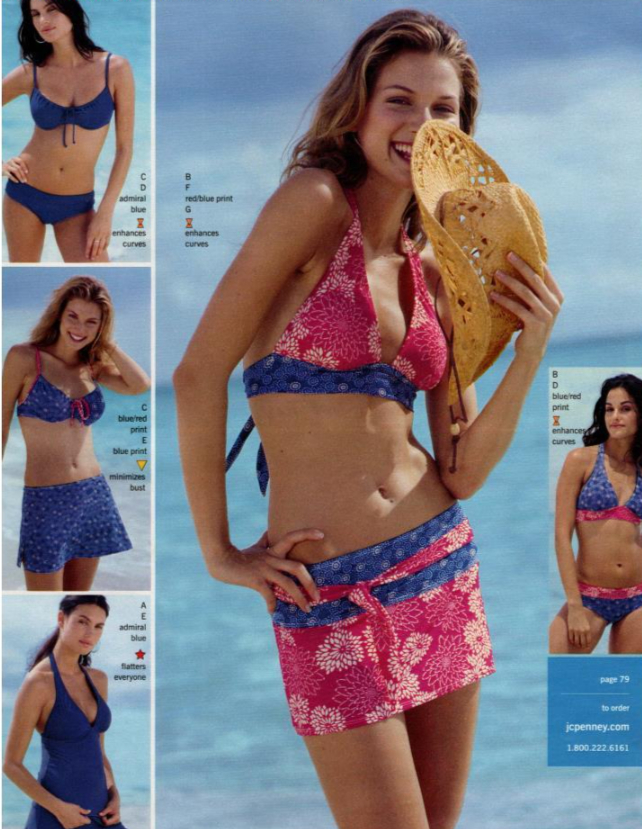
By the 1990s, the culture around swimwear in both America and abroad had changed dramatically, driven by social liberation movements of the 1970s and 1980s. The bikini had become a mundane swimwear option, and men’s swimwear had diversified into shorter and tighter styles such as briefs and thongs – along with lined board shorts and athletic compression options. While bikinis were no longer treated as salacious, an explosion of styles became available on the open and increasingly globalized and mass-produced market including tankinis, swim dresses, and even modern fashionable full-coverage bodysuits to provide the proper amount of protection and comfort for everyone, regardless of their needs. Benefiting from cheap and versatile modern materials, mass media, and international trade, swimwear became less about one dominant cultural expectation and more about personal choice and expression.
At the same time, this choice had its limits. While by the 1990s, many places in Europe, such as Germany, viewed beach nudity as a normalized recreational practice managed through many “Freikörperkultur,” or “FKK,” zones – translating to “Free Body Culture” – that featured signs and were protected by local laws, American culture remained far more restrictive toward public nudity, with sanctioned nude outdoor spaces being rare and highly controversial. American culture had grown quite comfortable with exposing more skin – but the cultural acceptance of female breasts and genitals of both sexes as natural features that could exist in non-sexual contexts that Europe had embraced, had not taken hold.
Even within clothed contexts however – not all skin was treated equally. While gender-conforming and conventionally attractive bodies could get away with a full array of clothing choices at the beach, bodies that deviated from these standards – queer bodies, trans bodies, fat bodies, disabled bodies, aging bodies, and BIPOC bodies that deviated from Western beauty standards were subject to scrutiny that made public beaches a socially competitive environment where society was allowed to openly project its anxieties about gender, sexuality, beauty, and power onto others. While many choices may have existed for clothing on the market, the expectations were made clear who was allowed to wear what, and those expectations were widely enforced through the use of shame and ridicule directed at those who defy them.
The Clothing Optional Era
Once again: Enter Denny Blaine Park. Following Seattle v. Johnson in 1990, Seattle dropped its lewd conduct ordinance due to the court finding it overbroad and restricting First Amendment rights, meaning that simple toplessness or simple nudity were no longer treated as illegal conduct by themselves. With this action, Seattle joined a small handful of cities in America where people had the ability to express themselves through respectful and nonsexual nudity without fear of legal repercussions – so long as their behaviors did not cross over into those that were actually obscene or harmful.
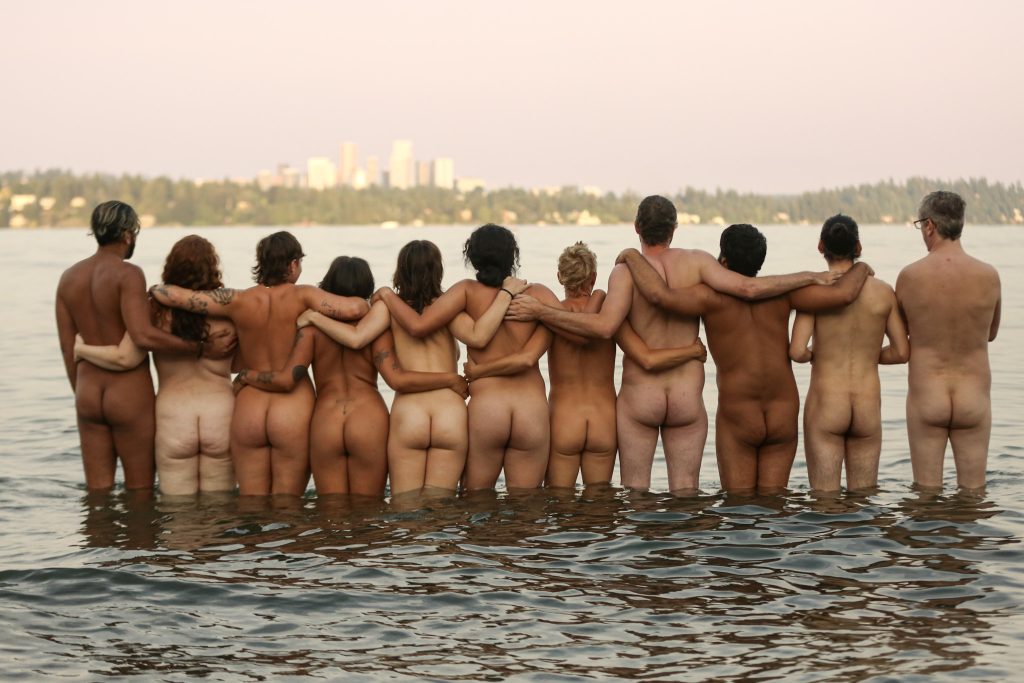
At Denny Blaine Park, with its then 70-year history of being a space where cultural expectations surrounding body presentation and beachwear had been challenged, this legal shift led to a cultural shift that allowed this cultural incubation to continue more openly. While the beach was not officially designated as clothing optional, it became increasingly well-known throughout the 2000s and 2010s, continuing to be a community hub for queer and body-diverse people looking to challenge the norms and find community away from the mainstream culture that othered and marginalized them. Particularly, in recent years, the park has seen a substantial increase in use by the transgender community, as a rare public beach where transgender people report being able to feel safe and accepted in their bodies.
In a 2023 article, following the backlash to an anonymous donor, later identified as a business mogul and adjacent property owner who lives next door who was reported to have pledged $550,000 to build a playground at the park in what the community felt was a transparent attempt to displace the historic queer user base, Vince Reiman stated: “I’m a Black transgender man and a homeowner in the city. Denny Blaine is the only park that I feel safe to swim in. When I transitioned, I thought that I would never be able to swim in Lake Washington again…. Denny Blaine is my miracle.”
That quote embodies the role of Denny Blaine Park in Seattle’s cultural evolution. This park is not simply a place people can remove their clothing – it is a park where, for generations, people have found ways to remove shame. It is a place where people have gathered to subvert the demands of a mainstream culture that did not consider them or their needs, and where people have reclaimed the comfort, dignity, and freedom that those whom the dominant culture deems worthy enjoy in daily life, and take for granted.
The history of swimwear is as much about the evolution of textiles and fashion trends as it is a history of power. Every generation, through its fashion choices and expectations surrounding personal expression in public spaces, has decided which bodies are acceptable, which are scandalous, and how and where they should be covered up or hidden. As Denny Blaine’s history shows – these expectations are not static, and are constantly evolving and changing due to innovations in science, trade, culture, and most importantly – those who dare to challenge them. Denny Blaine Park has not always looked like it does today, but it has always been a place where Seattleites have challenged the boundaries of beachwear, modesty, gender, and expression, through small and peaceful acts of cultural defiance. Today – this is the legacy that we fight to preserve and protect: a public beach defined by the people brave enough to make room for themselves in a society that tells them they do not belong, and generous enough to make room for others to join them.
Leave a Reply