Written by: FODB Team
Our local ecology is comprised of many different types of plants, animals, insects, and microbes that work together to create a healthy environment and keep systems stable. This precarious situation can be interrupted with the addition of invasive or destructive species and practices. Below are a few examples of threats to our ecology:
Himalayan Blackberry (Rubus armeniacus)

The Himalayan Blackberry, also known as the Armenian Blackberry, is a familiar plant to anyone living in the Pacific Northwest. The perennial plant has a large polygonal shaped stem (cane) covered in thorns with leaves in groups of three to five leaflets. The thorny plant typically produces flowers in the spring and grow blackberries in late summer/early fall.
Blackberries are very fast growers and do a fantastic job of out competing native flora. These plants have very large and tough rhizomes, roughly the size of a fist or large softball, that can shoot off lateral roots and produce additional blackberries that share the same root system. Likewise, blackberries will grow over and in front of neighboring plants, outcompeting them to steal sunlight, water, and resources in the soil vital for long term growth. Cutting back one stem is unfortunately not enough, as the underground root system can sprout up additional canes and continue producing blackberry canes.
Roots must be dug out of the soil and fully removed to clear the land of blackberries. Any remaining roots risks new blackberries coming back within months. While some roots can be inaccessible, consistent pruning and supporting native plants can help deplete the blackberries’ energy and gives the local ecology a chance to fight against invasive species.
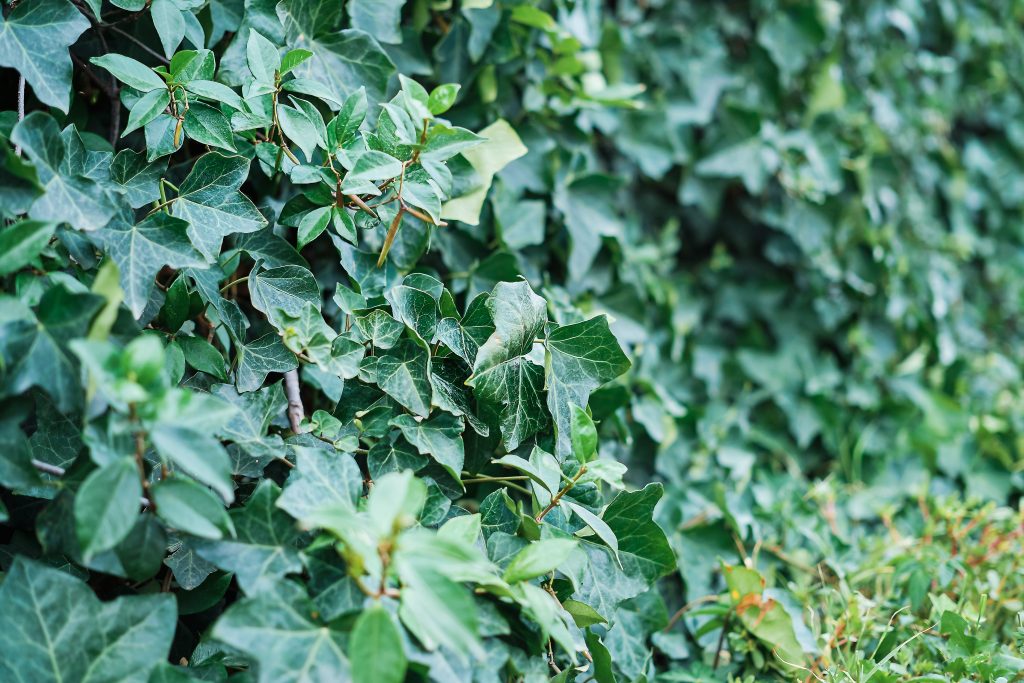
English Ivy (Hedera helix)
Native to Northern parts of Europe, English ivy has become an invasive species in North America and parts of Oceania. The plant is an evergreen climbing plant that takes advantage of vertical surfaces like walls, trees, ledges, and rocks, but will equally grow across open groundcover. Its quick spreading nature allows it to take up space and overpower native flora, displacing indigenous groundcover like Whitebark Raspberry, Trailing Blackberry, and Sword Ferns.
Climbing English Ivy can attach itself to trees and compete with them, as well as shaded plants, for light and nutrients in the soil. If left unchecked, English Ivy can grow so large on trees so as to weigh down branches and diminish structural integrity. Ivy can be removed by cutting vines at the base of the tree and pruning vines up to about chest height. With no direct access to soil, the ivy higher up on the tree will slowly die off. English Ivy removed from the ground should be quickly replaced with native plants and mulch to prevent future invasive regrowth.
Bindweed
(Convolvulus)

Known as Morning Glory and Bindweed, Convolvulus is a genus consisting of about 200 different species of flowering vining plants. Their most notable feature is a white or pinkish flower shaped similar to a horn or gramophone. Bindweed is considered an invasive species and a noxious weed in the Pacific Northwest, wrapping vines around plants and trees in an attempt to outcompete native plants for sunlight and water.
Bindweed roots are thin and can be pulled off of the host plant, but their roots can run deep into the soil. Much like English ivy and Himalayan Blackberries, the roots of Bindweed must be fully removed from the soil to prevent future regrowth or leftover root fragments from producing lateral roots.
Disturbed soil presents a prime opportunity for new plants, especially invasive plants, to take advantage and grow in these disturbed patches. To prevent regrowth or reintroduction of invasive species, native plants like Nootka Rose, Osoberry, Ocean Spray, Oregon Grape, Sword Fern (in shaded areas) can be planted in these sites and supported with mulch on top of the soil and around newly planted plants.
What can I do to help?
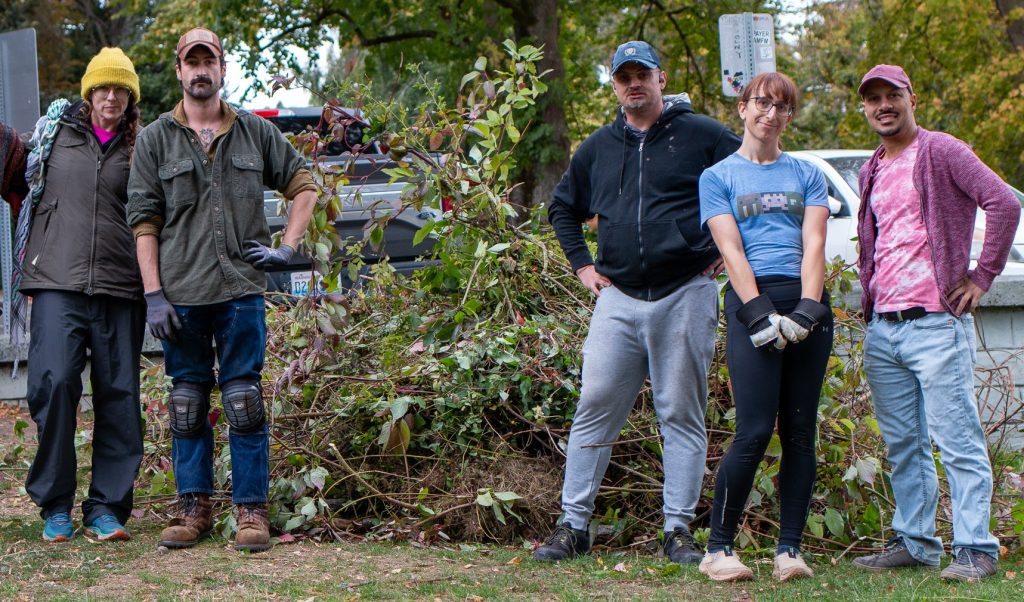
Taking part in landscaping work parties and ecology restoration is a fantastic opportunity to support the local ecology and make long-lasting change. It’s a lot of work for just one person, but many small acts from many individuals, part of a larger push, can drastically improve environments. But before diving into landscaping, a few pieces of information are needed:
- Your safety and protection are paramount. Be aware of the weather and environment you will be working in and dress accordingly:
- Wear long sleeve shirts, long pants, closed-toed shoes, a good pair of gloves and maybe a hat on sunny days. Thorns and bramble can scratch you up, and plants may irritate the skin, while unfiltered sunlight can cause sunburn or quickly cause fatigue
- Drink plenty of water, have a snack or two, and take breaks! Plants move extremely slowly compared to us; we’re not in a rush. Because of this, don’t feel pressured to finish everything or achieve a specific goal. Any work toward ecological restoration is a major win.
- Be aware of tools:
- Shovels should be laid down in “turtle mode,” i.e. with the shovel tip touching the ground and the blade arching upwards. This prevents the shovel from striking anyone should someone step on it.
- Keep all sharp tools pointed towards the ground when walking and be aware of people around and behind you.
- Unused tools should be brushed clean of any dirt or plant seeds and kept with other tools. This keeps all tools accounted for and prevents someone being injured inadvertently.
- Treat all with respect:
- Show kindness, compassion, and patience not only for fellow stewards but also to the public, the environment, and the community we work in.

If you’d like to get involved and help protect our local ecology by participating in a FoDB landscaping party, please see our events calendar follow us on Instagram @friendsofdennyblaine to stay up to date on our planned work parties.
Leave a Reply